Ho Chi Minh City Motorbike Guide: Routes, Tips & Safety
Your complete guide to riding a motorbike in Ho Chi Minh City — navigating traffic, the best routes, parking tips, fuel stops, and how to survive Saigon's beautiful chaos.
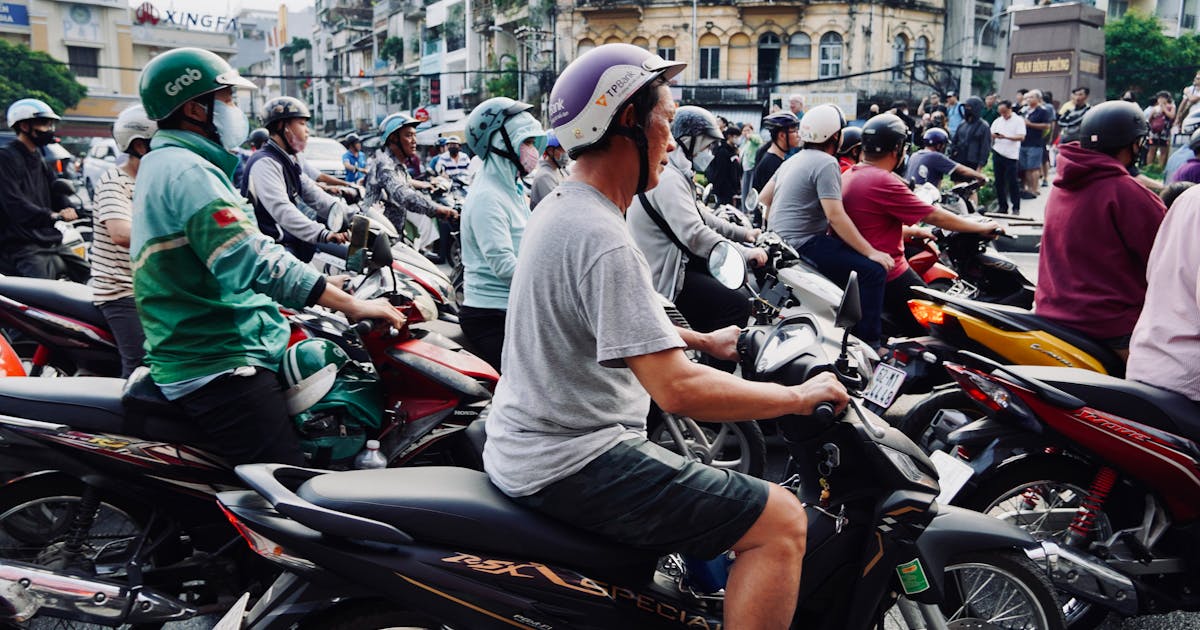
Welcome to the beautiful chaos
Ho Chi Minh City — still called Saigon by almost everyone who lives here — is home to roughly 10 million people and an estimated 8 million motorbikes. That's not a typo. Motorbikes outnumber cars nearly 20 to 1, and they are the lifeblood of this city.
Riding here for the first time is sensory overload. Rivers of motorbikes flow through intersections with no apparent rules. Horns honk constantly. Someone is carrying a refrigerator on a scooter. A family of four cruises past you, the toddler asleep in mom's arms.
And yet, somehow, it works. Traffic in Saigon has a rhythm — and once you feel it, riding here becomes one of the most exhilarating urban experiences in Southeast Asia.
Understanding Saigon traffic
The first thing to unlearn is everything you know about traffic from your home country. Saigon traffic operates on a completely different logic:
The flow principle
Traffic here doesn't follow lanes — it follows flow. Think of it like water in a river. Everyone moves in roughly the same direction, finding gaps, merging, splitting around obstacles. Your job is to be predictable and move with the current.
Speed matters (but not the way you think)
Saigon traffic rarely exceeds 40 km/h. Accidents happen not because people go fast, but because someone does something unexpected. A sudden stop, a sharp turn without signaling, a phone-distracted swerve — these are what cause problems.
The horn is communication
In Western countries, honking means "you made a mistake" or "I'm angry." In Vietnam, it means "I'm here." A short beep before overtaking, a tap at intersections, a double-honk before a blind corner. It's polite, it's expected, and it keeps everyone alive.
Intersections
Saigon intersections can look terrifying. Bikes come from all directions, seemingly without stopping. The secret: commit and go slowly. Edge into the intersection at walking speed, make eye contact when you can, and let the flow absorb you. The worst thing you can do is stop in the middle.
Your first ride: a survival checklist
Before you venture into Saigon traffic, make sure you've got these basics:
- Wear a proper helmet. Full-face is best. The cheap foam "eggshell" helmets sold on sidewalks won't protect you.
- Keep your phone in a holder, not your pocket. You'll need maps, and pulling over every 2 minutes gets old fast.
- Lock your bags. Keep backpack zippers facing your body. Bag snatching happens, especially in tourist areas.
- Start early. Traffic is lightest before 7 AM and between 1–3 PM. Avoid 7:30–9 AM and 5–7 PM if possible — these are peak chaos.
- Fuel up. Petrol stations (cây xăng) are everywhere. A full tank on a scooter costs about 50,000–70,000 VND and lasts 150–200 km.
Best routes and rides around Saigon
District 1 to District 2 (Thu Duc) — The riverside ride
Cross the Saigon Bridge or Thu Thiem Bridge for a quick escape from District 1's density. The Thao Dien area in the old District 2 has tree-lined streets, excellent coffee shops, and a much calmer vibe. Great for a morning ride.
Distance: 5–8 km one way Vibe: Urban, gentrified, cafe-hopping
Saigon to Cu Chi Tunnels
A popular half-day trip. Take Highway 22 northwest out of the city. The road is straightforward but busy with trucks — stay alert. The Cu Chi Tunnels are a must-visit historical site, and the ride itself gives you a taste of Vietnam's countryside.
Distance: 40 km one way Time: 1–1.5 hours each way Vibe: Highway riding, historical tourism
Saigon to Can Gio Mangrove Forest
Head south through Nha Be district to the Can Gio Biosphere Reserve. The road follows the river, passes shrimp farms, and ends at a beautiful mangrove forest with a monkey island. Perfect day trip.
Distance: 50 km one way Time: 1.5–2 hours each way Vibe: Nature escape, riverside scenery
Saigon to Vung Tau
The classic Saigon weekend escape. Take the ferry from Cat Lai (bikes allowed) or ride the highway. Vung Tau has beaches, seafood, and the famous Christ statue. Best as an overnight trip.
Distance: 95 km one way (road) or 30 min ferry + 30 km Time: 2–2.5 hours by road Vibe: Beach weekend, seafood
Saigon to Da Lat
For something more ambitious. The 300 km ride to Da Lat takes you from sea-level Saigon up to 1,500 meters in the Central Highlands. The last 60 km are winding mountain roads with stunning views. Not for beginners — but unforgettable.
Distance: 300 km one way Time: 6–8 hours Vibe: Mountain adventure, cool climate
Parking in Saigon
Parking is easier than you'd think:
- Street parking: Look for the blue "P" signs or rows of parked bikes on the sidewalk. Cost: 5,000–10,000 VND. An attendant will give you a ticket — keep it to get your bike back.
- Mall / building parking: Covered basement parking is available at most malls and office buildings. Usually 5,000–10,000 VND.
- Restaurants / cafes: Most have a parking area. Staff will direct you.
- Never leave your bike unlocked, even for a minute. Use the built-in steering lock at minimum.
Fuel and maintenance
Petrol stations
Petrol stations are everywhere in HCMC. Look for the Petrolimex (green/red) or PV Oil (blue) signs. Most are full-service — an attendant will fill your tank. Just say "đầy bình" (full tank) or hold up fingers for how many liters you want.
Current prices (2026): ~25,000 VND/liter for RON 95.
Flat tyres
It'll happen eventually. The good news: tyre repair shops (vá xe) are on practically every block. A flat tyre fix costs 20,000–40,000 VND and takes 10 minutes. If you're stranded, Google Maps "sửa xe máy" (motorbike repair) and you'll find one within walking distance.
Oil changes
If you're renting long-term (monthly), your rental shop should handle oil changes. For reference, most bikes need an oil change every 1,000–1,500 km.
Weather and when to ride
Saigon has two seasons:
Dry season (December–April)
Hot, sunny, and perfect for riding. Temperatures hit 33–36°C most days. Ride early morning or late afternoon to avoid the worst heat.
Rainy season (May–November)
Afternoon downpours are a daily occurrence, usually between 3–6 PM. They're intense but short — 30–60 minutes typically. The morning is usually dry. Strategy: ride in the morning, take shelter during the afternoon rain, ride again in the evening.
Rainy season tips:
- Carry a rain poncho (available at any convenience store for 15,000 VND)
- Slow down on wet roads — painted lane markings and metal manhole covers become ice-skating rinks
- If the rain is torrential, pull over under an overpass or shopfront awning. Everyone does it.
Safety hotspots to be aware of
Bag snatching areas
District 1 (especially around Bui Vien and Nguyen Hue), District 3, and Phu Nhuan. Wear your bag cross-body with the clasp facing inward, or put it in the under-seat storage.
Flood-prone areas
During heavy rains, low-lying areas in Binh Thanh, parts of Thu Duc, and some District 8 streets flood. Avoid riding through deep water — it can stall your engine and hide obstacles.
Construction zones
Saigon is constantly under construction. Metro Line 1 (still ongoing in some areas) has created detours and rough road surfaces along its route through District 1 and Binh Thanh.
Essential Vietnamese for riders
| English | Vietnamese | Pronunciation |
|---|---|---|
| Full tank, please | Đầy bình | "Day bin" |
| How much? | Bao nhiêu? | "Bow nyew" |
| Turn left | Rẽ trái | "Ray chai" |
| Turn right | Rẽ phải | "Ray fai" |
| Straight ahead | Đi thẳng | "Dee tang" |
| Stop | Dừng lại | "Yung lie" |
| Motorbike repair | Sửa xe máy | "Sua se my" |
| Petrol station | Cây xăng | "Kay sung" |
| Help! | Cứu tôi! | "Koo toy" |
Getting started
Ready to explore Saigon on two wheels? Browse our fleet of rental motorbikes — we offer daily, weekly, and monthly rentals with free delivery across Ho Chi Minh City. All bikes are quality-checked and come with a full-face helmet, phone holder, and 24/7 support.
If you're new to riding, we recommend starting with a Honda Vision or Yamaha Janus — they're lightweight, easy to handle, and perfect for learning Saigon's rhythm.
Frequently asked questions
Is it safe to ride a motorbike in Ho Chi Minh City? With proper precautions, yes. Millions of people do it every day. Start in quieter districts, build confidence, and work your way into busier areas.
What's the speed limit in HCMC? Generally 40 km/h on urban roads and 60 km/h on larger boulevards. In practice, traffic flow rarely exceeds 30–40 km/h anyway.
Can I ride on the highway? Bikes under 175cc are not allowed on expressways (cao tốc). This includes the HCMC–Long Thanh–Dầu Giây expressway. Use the parallel national roads instead.
Where should I avoid riding? Avoid Highway 1A (heavy truck traffic) and any expressway. Also avoid Bui Vien walking street (pedestrian only on weekends).
What if I get in an accident? Stop, check for injuries, call 115 (ambulance) if needed. Do not move the vehicles until police arrive (call 113). Exchange information with the other party. Contact your rental shop and your travel insurance provider immediately.
Related articles
Vietnam-Laos Border Crossing by Motorbike
Everything you need to know about crossing the Vietnam-Laos border with a motorbike — which crossings work, required documents, current restrictions, and practical tips for 2026.
Route GuideDa Nang to Hoi An by Motorbike: Rental & Route Guide
How to ride from Da Nang to Hoi An by motorbike — the best route via the coast or countryside, rental options, the Hai Van Pass detour, and tips for exploring Central Vietnam on two wheels.